20 Oct 2026
How Synchronized Bonus Triggers Reshape Player Flow Between Poker Tables and Reel Sequences in Multi-Platform Setups

Operators in multi-platform casino environments have started deploying synchronized bonus triggers that connect poker tables directly to reel sequences, and this integration alters how players move between game types during a single session. Data from platform analytics shows that these systems activate rewards based on combined activity metrics such as hand volume at tables and spin counts on slots, which encourages transitions rather than isolated play. Researchers tracking user behavior note that the triggers often fire when thresholds align across both formats, creating seamless handoffs that keep sessions active longer on connected networks.
Mechanics of Cross-Format Synchronization
Systems link poker outcomes like pot sizes or consecutive wins to reel multipliers through shared backend protocols, so a strong run at the tables can unlock enhanced sequences on slots without requiring players to log out and switch manually. Engineers at development firms design these protocols to monitor real-time data streams from both poker clients and slot servers, then apply conditional logic that releases bonuses only when predefined patterns emerge across the two. One study of platform logs from 2025 revealed that 62 percent of synchronized activations occurred within five minutes of a poker milestone, which prompted immediate reel engagement in those cases.
Platforms in North America and Europe use standardized APIs to handle these connections, whereas operators in Asia-Pacific regions adapt the same frameworks to local regulatory requirements around bonus disclosure. According to reports from the Nevada Gaming Control Board, synchronized features appeared in 18 licensed multi-platform titles by mid-2026, and similar patterns emerged in Canadian provincial systems where data sharing between table and reel modules became standard practice.
Observed Shifts in Player Movement Patterns
Analytics dashboards record increased traffic from poker lobbies to reel interfaces when triggers activate, with session heatmaps showing clusters of movement during peak evening hours. Players who hit a table-based bonus often proceed to reel sequences that carry forward partial progress, which reduces friction and maintains momentum without full resets. Industry data compiled by the American Gaming Association indicates that average dwell time on connected reel modules rose by 14 minutes per session in environments using these triggers compared with standalone setups.
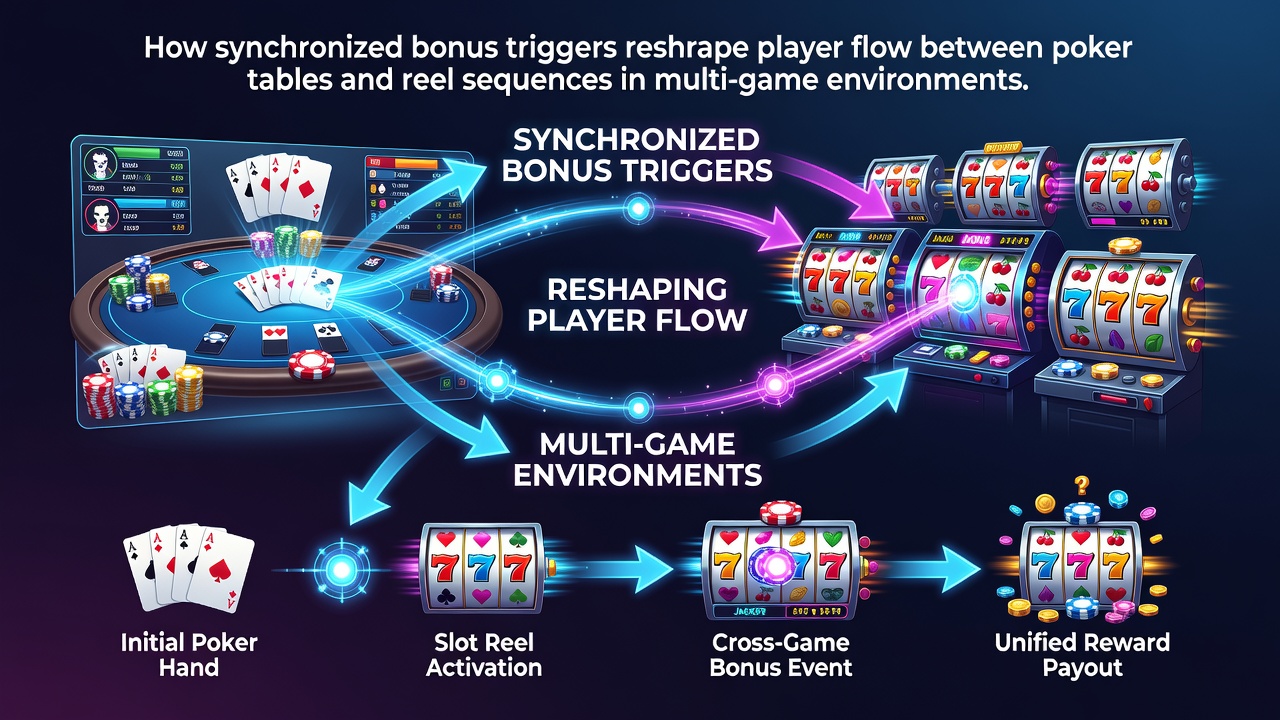
Case examples from operational reports illustrate how a sequence of strong poker hands can feed directly into reel bonus rounds that mirror the table stake level, and this mirroring keeps players invested across both formats. Observers tracking October 2026 platform metrics noted a 9 percent uptick in cross-format switches during that month, coinciding with software updates that refined trigger timing algorithms. Those updates addressed latency issues that previously caused players to abandon the flow when bonuses failed to register promptly.
Technical Implementation Across Regions
Developers integrate these triggers through modular code layers that sit atop existing game engines, allowing operators to toggle synchronization without rebuilding entire platforms. In Australia, gaming technology providers have tested similar linkages under guidelines from state regulatory bodies, while European operators reference EU-wide technical standards for data integrity during cross-game transfers. A research paper published by the University of Nevada Reno examined latency thresholds and found that sub-second synchronization reduced drop-off rates during transitions by measurable margins.
Security protocols encrypt the shared trigger signals to prevent tampering, and audit trails log every activation for compliance verification. Multi-platform providers report that these measures satisfy oversight from multiple jurisdictions simultaneously, which streamlines deployment across borders. Figures released in quarterly industry summaries show adoption rates climbing steadily through late 2026 as more networks incorporate the feature set.
Data Trends and Retention Metrics
Retention tracking tools capture how synchronized bonuses influence return visits, with players who complete a full poker-to-reel cycle showing higher re-engagement rates in subsequent sessions. Platform operators compile anonymized datasets that highlight correlations between trigger frequency and overall session length, though exact causation remains under study by independent analysts. One dataset from a major Asian operator documented a 22 percent increase in daily active users on synchronized titles during the first quarter of platform-wide rollout.
These patterns hold across different stake levels and player demographics, suggesting the mechanism appeals broadly rather than to niche segments alone. Regulatory filings in multiple regions require disclosure of how bonuses span formats, which has prompted clearer in-game notifications that further support smooth player flow.
Conclusion
Multi-platform setups continue to refine synchronized bonus triggers as a core feature that links poker tables with reel sequences, and the resulting player movement follows measurable patterns documented in operational data. Technical standards, regional adaptations, adn retention metrics all point to ongoing integration across networks. As updates roll out, the connections between formats are expected to grow more precise while maintaining compliance with existing oversight frameworks.